
SI Joint Pain Chiropractor in Twin Falls, Idaho
Pain at the base of your spine, on one side of your lower back, or deep in the buttock can make sitting, climbing stairs, and rolling over in bed harder than they should be. These symptoms often trace back to the sacroiliac (SI) joints.
At Canyon Springs Chiropractic, Dr. Madsen helps patients across Twin Falls and the Magic Valley understand what is driving their SI joint pain and builds a care plan around how their pelvis and lower back actually move.
What Is the SI Joint?
Your two sacroiliac joints connect the base of your spine (the sacrum) to your pelvis, one on each side. They only move a small amount, but that small amount matters. The SI joints absorb and transfer force between your upper body and your legs every time you walk, bend, lift, or stand up from a chair.
When one of these joints moves too much, too little, or unevenly compared with the other side, the surrounding muscles and ligaments can become irritated and painful.
Common signs of SI joint dysfunction include:
- Pain on one side of the lower back or just below the belt line
- Aching in the buttock, hip, or groin
- Pain that travels into the back of the thigh, usually stopping above the knee
- Discomfort when standing up, climbing stairs, or getting out of a car
- Pain when standing on one leg or sleeping on the affected side
- Stiffness after sitting for long periods


What Causes SI Joint Pain?
SI joint pain can develop suddenly or build up over time. Common contributors include:
- Falls or impacts, such as landing on your tailbone or a car accident
- Repetitive strain from lifting, twisting, or physical work
- Pregnancy and the months after delivery, when ligaments are looser
- Differences in leg length or walking patterns
- Earlier lower back or hip problems that change how load is shared
- Long hours sitting, driving, or standing in one position
Because SI joint pain can feel a lot like sciatica, a disc problem, or hip pain, a careful exam is the first step. If your pain runs down the leg past the knee or comes with numbness or tingling, our sciatica page explains how we evaluate that pattern.
How Chiropractic Care May Help SI Joint Pain
Our goal is to restore balanced, comfortable movement through the pelvis and lower back. After a thorough history and exam, your care may include:
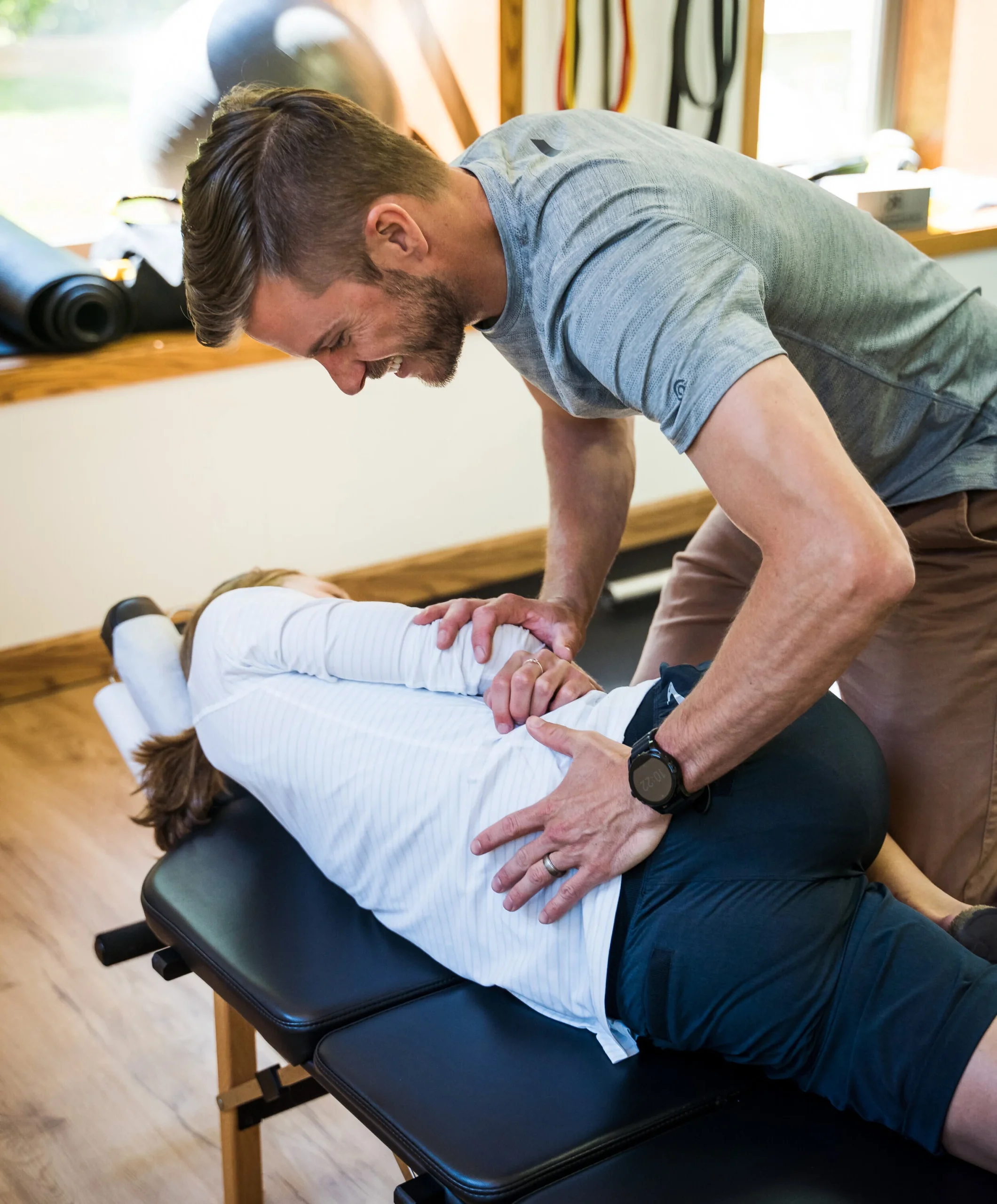
- Gentle chiropractic adjustments to the pelvis and lower spine
- Flexion-distraction or instrument-assisted adjustments for patients who prefer a lower-force approach
- Soft tissue therapy for the glutes, hip flexors, and lower back muscles that often tighten around an irritated SI joint
- Stretching and strengthening exercises to support pelvic stability at home
- Guidance on sitting, lifting, sleeping, and work posture
Many patients ask whether a chiropractor is good for SI joint pain. Chiropractic care paired with targeted exercise is a common conservative approach for SI joint dysfunction. Every case is different, so we will explain what we find, what we recommend, and what a realistic timeline looks like for you.
SI Joint Pain During and After Pregnancy
During pregnancy, the body releases hormones that loosen the ligaments around the pelvis to prepare for delivery. Combined with a shifting center of gravity, this can place extra stress on the SI joints. We offer gentle, pregnancy-safe care. Learn more on our pregnancy back pain page.
When to Seek Medical Care Right Away
Seek prompt medical care if lower back or pelvic pain comes with fever, loss of bladder or bowel control, numbness in the groin area, or worsening leg weakness, or if it follows a serious fall or accident. These signs need urgent evaluation.

SI Joint Pain FAQs
Can a chiropractor help SI joint pain?
Chiropractic care is a common conservative option for SI joint pain. Adjustments, soft tissue work, and exercise aim to improve how the pelvis moves and reduce strain on the surrounding tissues. Your exam will show whether this approach is a good fit for you.
How long does SI joint pain take to improve?
It depends on how long you have had symptoms, what is driving them, and your activity level. Some patients notice changes within a few visits, while longer-standing problems usually take more time. We review your progress at each visit.
What is the difference between SI joint pain and sciatica?
SI joint pain usually stays in the lower back, buttock, and back of the thigh. Sciatica often comes from an irritated nerve root in the lower spine and more commonly travels below the knee with numbness or tingling. The two can overlap, which is why a hands-on exam matters.
Do I need X-rays first?
Most patients do not. Dr. Madsen uses a hands-on exam and movement testing to evaluate SI joint pain, and will refer you for imaging or to another provider if your exam shows it is needed.
Schedule Your Visit in Twin Falls
If SI joint pain is making it hard to sit, sleep, or stay active, we are here to help. Canyon Springs Chiropractic serves Twin Falls, Jerome, Kimberly, Filer, Buhl, Burley, and the greater Magic Valley. New patients can read what to expect on your first visit before coming in.